
Fever, cough, diarrhoea, mouth sores and rashes do not identify one infection in a person living with HIV. By separating the likely pathogen, the body site, the severity and the patient’s HIV status, you can understand why treatment ranges from oral medicines to hospital-based therapy—and why antiretroviral treatment must be coordinated with it.
Key takeaways
- Use symptoms, CD4 count and targeted tests to identify the infection.
- Choose medicine for the pathogen, body site and drug interactions.
- Seek urgent care for low oxygen, severe dehydration or worsening symptoms.
- Continue ART and complete follow-up tests after acute infection treatment.
How clinicians tell similar HIV-related symptoms apart
Fever, cough, diarrhoea, mouth lesions and rashes do not identify one infection. Clinicians combine the time course, CD4 count, examination, oxygen level and targeted tests. These distinctions explain how HIV infection treatments differ for common infections.
| Condition | Clues on examination | Tests that help distinguish it |
|---|---|---|
| Tuberculosis | Weeks of fever, night sweats, weight loss, cough, lymph nodes or extrapulmonary signs | Chest X-ray; sputum smear, culture and molecular TB test; biopsy or fluid testing for extrapulmonary disease |
| Bacterial pneumonia | Abrupt fever, pleuritic pain, productive cough, crackles and a focal consolidation | Chest X-ray, oxygen saturation, blood or sputum cultures in severe illness |
| PCP | Subacute dry cough, exertional breathlessness, low oxygen and diffuse chest findings | Chest CT with bilateral ground-glass change; induced sputum or bronchoscopy for PCR or staining; serum beta-D-glucan supports but does not prove PCP |
| Candidiasis | White plaques that scrape off suggest oral thrush; painful swallowing suggests oesophageal disease | Oral examination; endoscopy if oesophageal symptoms persist or diagnosis is uncertain |
| Gastroenteritis | Watery or bloody diarrhoea, cramps, vomiting and dehydration | Stool culture or PCR, ova-and-parasite testing, and C. difficile testing after antibiotics |
| Herpes or zoster | Painful grouped vesicles; zoster follows one-sided dermatome, while herpes recurs at mucosal or genital sites | Swab a fresh lesion for HSV or VZV PCR |
| Other infections | Headache, confusion, focal weakness or visual symptoms require urgent assessment | Brain imaging and toxoplasma testing; eye examination for CMV retinitis |
Failure to improve, hypoxia, confusion, severe dehydration or extensive lesions requires same-day assessment rather than empirical self-treatment.
Why the pathogen and body site determine the medicine
The pathogen determines the drug class, while the body site determines whether medicine can reach the infection through the bloodstream. HIV infection treatment choices also change with severity, resistance, organ function, allergies, pregnancy and drug interactions.
| Infection type | Treatment approach | What changes the choice |
|---|---|---|
| Tuberculosis | A multidrug regimen, not a routine pneumonia antibiotic | Rifampin interacts with several antiretrovirals; TB meningitis needs an individualized plan |
| Bacterial | Antibiotics selected for the syndrome, cultures, resistance patterns and recent antibiotic exposure | Low CD4 count, poor viral control or severe lung disease lowers the threshold for hospital assessment |
| Fungal | An antifungal matched to the organism and site | Amphotericin B can injure the kidneys and lower electrolytes; deep disease needs systemic treatment |
| Viral | An antiviral targeting that virus | Extensive herpes may need intravenous acyclovir; CMV retinitis needs urgent eye assessment and systemic therapy |
| Parasitic | An antiparasitic chosen for the identified organism and affected tissue | Brain, eye or disseminated disease requires specialist-directed treatment |
A white coating limited to the mouth can respond to clotrimazole or nystatin. Painful swallowing suggests oesophageal candidiasis, which usually needs systemic fluconazole for 14 to 21 days; a stronger mouthwash will not treat infection below the throat.
Small, localised herpes lesions may be treated with oral acyclovir, valacyclovir or famciclovir. Severe, extensive, chronic or visceral disease can require intravenous acyclovir, and failure to improve raises concern for resistance. These distinctions explain why HIV treatment for different infections cannot be selected from symptoms alone.
When infection treatment requires urgent or hospital care
Breathlessness at rest, blue lips, confusion, fainting, chest pain, coughing blood, or oxygen saturation below 92% needs emergency assessment. A person with HIV also needs same-day review for persistent fever with rapid breathing, dehydration from diarrhoea or vomiting, inability to swallow fluids, severe headache, neck stiffness, seizures, or a rapidly spreading rash.
- Hospital assessment is more likely when CD4 is very low, viral load remains detectable, previous antibiotics failed, or kidney, liver, lung, or pregnancy-related risks limit outpatient choices.
- Oxygen is given for low blood oxygen or severe respiratory distress; intravenous fluids treat significant dehydration, while intravenous antibiotics, acyclovir, ganciclovir, or other medicines are reserved for severe disease, inability to take tablets, or a life-threatening site of infection.
- New floaters, flashes, or missing areas of vision require urgent ophthalmology assessment for CMV retinitis. Sight-threatening disease may need intravenous ganciclovir; delaying treatment risks permanent vision loss.
- Extensive, chronic, visceral, or non-improving herpes lesions may require intravenous acyclovir and testing for resistance.
- Suspected pulmonary or laryngeal tuberculosis requires a mask and airborne precautions while testing is arranged; admission may be needed for respiratory failure, TB meningitis, or inability to take treatment.
Common infection treatment in HIV should not replace ART, but clinicians time ART carefully with central-nervous-system infections and adjust it for rifampicin interactions.
How ART, tuberculosis medicines and organ tests shape the plan
ART remains the foundation of HIV infection treatment choices: treating tuberculosis or another acute infection alone does not control HIV. Clinicians usually continue established ART or start it promptly, but tuberculosis timing depends on immune status—within 2 weeks when CD4 is below 50 cells/mm3, and within 8 weeks when CD4 is 50 or higher.
TB meningitis requires an individualized delay because immune recovery can worsen brain inflammation.
Rifampicin lowers concentrations of several antiretrovirals, so clinicians may change the ART regimen or use rifabutin when it fits the tuberculosis combination. Rifabutin also interacts with medicines and needs regimen-specific dosing; never substitute it without specialist direction.
HIV specialist infection care checks these before prescribing or changing treatment:
- Kidney function: creatinine and estimated glomerular filtration rate guide dosing and help detect toxicity from tenofovir, trimethoprim-sulfamethoxazole, or amphotericin B.
- Liver function: AST, ALT and bilirubin influence choices when tuberculosis medicines or other drugs could cause hepatitis.
- Pregnancy, allergies and previous treatment: these affect drug safety, hypersensitivity risk and the chance of resistance.
- The complete medication list and ability to absorb oral medicines: vomiting, diarrhoea and drug interactions can make an apparently correct combination ineffective.
A falling liver test result, kidney injury, severe rash, potassium change or treatment failure may require stopping, replacing or adjusting a drug rather than abandoning ART.
What prevention and follow-up look like after the acute infection
PCP prophylaxis is recommended when CD4 is below 200 cells/mm3 or CD4 percentage is below 14%, and after a PCP episode. Toxoplasma prophylaxis is for Toxoplasma-IgG-positive patients with CD4 below 100 cells/mm3.
Trimethoprim-sulfamethoxazole can cover both, but check creatinine, potassium, blood counts, and rash; stop prophylaxis only after sustained immune recovery on ART and guideline CD4 criteria.
| Condition | Follow-up after initial treatment | When relapse or toxicity needs review |
|---|---|---|
| CMV retinitis | Continue valganciclovir or ganciclovir maintenance until immune recovery; schedule ophthalmology examinations. | New floaters, flashes, or visual-field loss needs emergency eye assessment. |
| Cryptococcal disease | Complete induction and consolidation, then fluconazole maintenance until immune recovery; assess headache and raised intracranial pressure. | Do not use routine repeat lumbar puncture alone to judge cure; return urgently for recurrent headache, confusion, or vomiting. |
| Toxoplasmosis | Complete at least six weeks of acute therapy, then maintenance; monitor neurological response and use repeat brain imaging if improvement is absent or symptoms return. | Persistent lesions or seizures require specialist reassessment. |
| Disseminated MAC | Continue combination therapy for at least 12 months and until sustained immune recovery; monitor symptoms, cultures when indicated, liver tests, and drug interactions. | Recurrent fever, weight loss, or abnormal tests may signal relapse or toxicity. |
Hiv @ AIDS CLINIC can provide useful hiv specialist infection care when rifamycins alter ART levels, amphotericin B threatens kidney function and electrolytes, or oral absorption, pregnancy, resistance, allergies, or organ tests complicate prevention and follow-up.
Related products
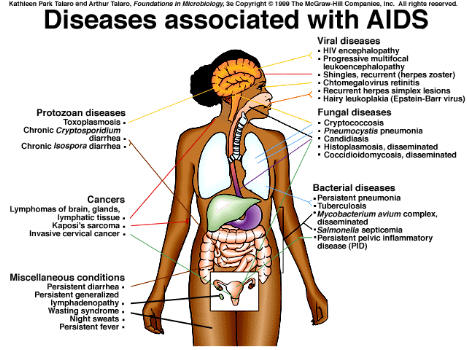 | Treatment Of Common Infections In HIV Tuberculosis treatment Pneumonia treatment fungal infection eg candidiasis treatment gastroenteritis treatment herpes simlex / zoster View product → |
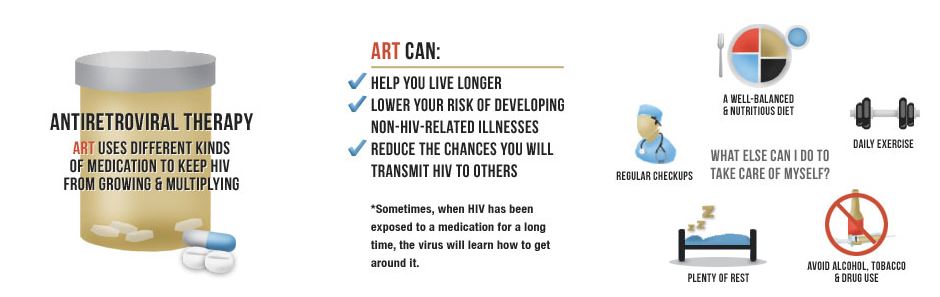 | There are different medicines for treating hiv patients .we choose regimen depending on the age of the patient , affordability of the patients and... View product → |
Frequently asked questions
How do clinicians tell similar HIV-related symptoms apart?
They assess the time course, CD4 count, physical examination, oxygen level and targeted tests rather than relying on symptoms alone.
Why does the pathogen and body site determine the medicine?
Different pathogens respond to different medicines, and the infected site affects drug choice, dose, treatment duration and the need for specialist care.
When does an infection require urgent or hospital care?
Urgent assessment is needed when infection causes low oxygen, severe dehydration, serious breathing problems, confusion or rapid deterioration.
How do ART, tuberculosis medicines and organ tests shape treatment?
Clinicians coordinate antiretroviral therapy with tuberculosis medicines, check for drug interactions and monitor organ tests that affect treatment safety.
What prevention and follow-up are needed after acute infection treatment?
Follow the prescribed course, attend repeat reviews and tests, continue ART as directed, and use prevention measures recommended by your HIV care team.
Keywords